Why Smaller Birthday Parties Often Feel More Meaningful
By Katie, Three Sisters Party Co. ·
Quick Answer
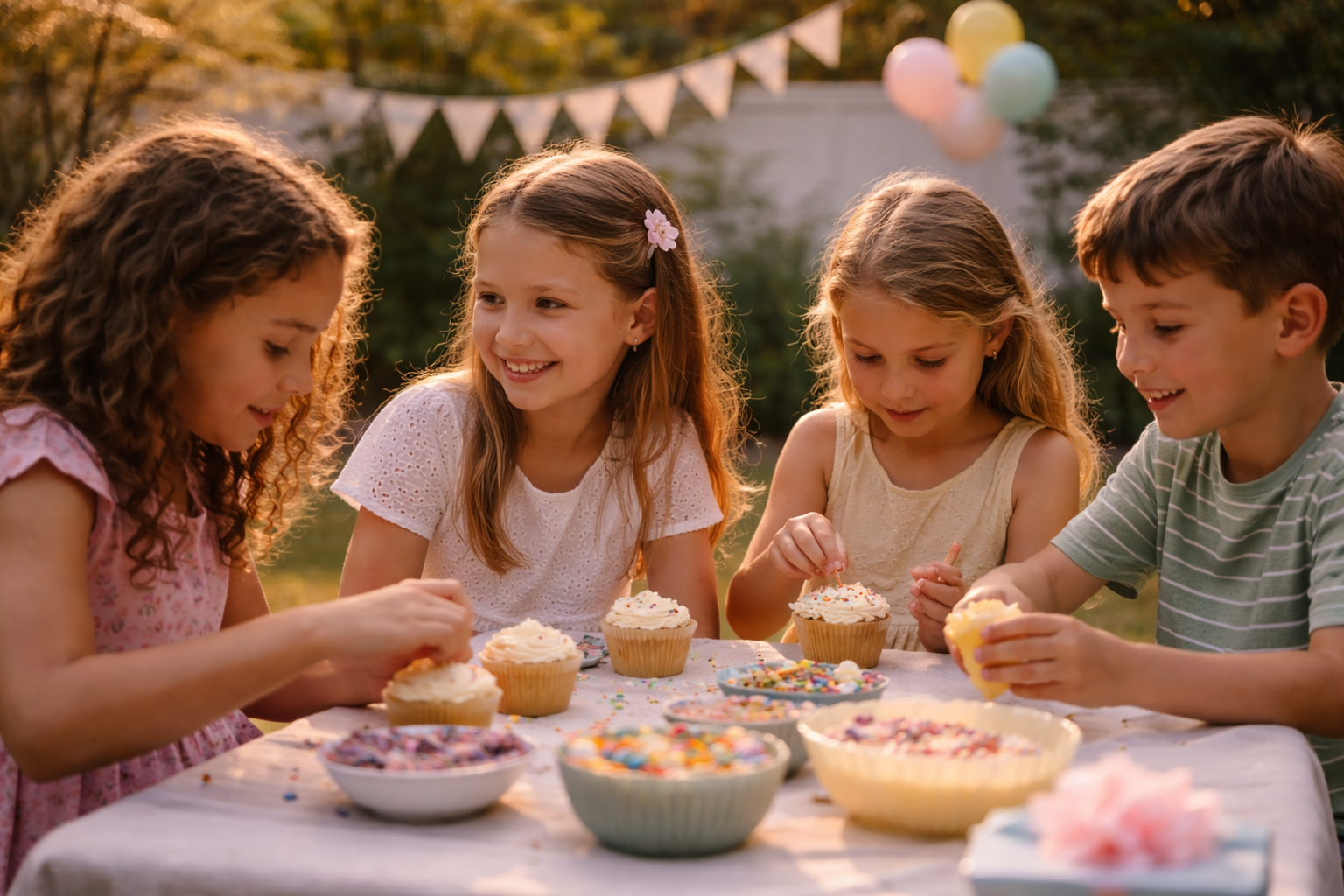
Smaller guest lists often create better memories because kids connect more deeply and the day feels calmer. Three Sisters Party Co. helps Capital Region families design intimate parties with simple seating and backyard games. Most rentals are customer setup, with pickup and local delivery available when possible.
There is a quiet pressure around birthday parties.
It rarely arrives loudly. It builds gradually.
A classmate invites the whole grade. Photos circulate. Stories get shared. Expectations shift.
Before long, a question forms in your mind.
Should we invite more people?
It is easy to assume that a larger guest list means a better celebration. More friends. More energy. More excitement.
But when you look closely at how children actually experience a party, a different pattern often emerges.
Smaller gatherings frequently create stronger memories.
Not because they are quieter. Not because they are simpler. But because they allow connection to deepen.
Children Are Social Learners
They are still building confidence in group settings. They are still understanding how to navigate dynamics, take turns, manage excitement, and include others.
When the guest list becomes large, the environment can shift from relational to reactive.
Noise increases. Movement becomes unpredictable. Conversations shorten. Attention divides.
Some children thrive in that environment. Many feel subtly overwhelmed.
In Smaller Groups, Space Opens Up
Children sit together longer. They move through activities without rushing. They experience more direct interaction with the birthday child.
That direct interaction is what anchors memory.
Think about what children talk about weeks later.
It is rarely the total number of guests.
It is who they sat next to during cake.
Who they teamed up with for a game.
Who gave them a specific gift.
These are relational details.
Smaller guest lists allow more of them.
The Pacing Difference
When there are fewer guests, transitions feel smoother. The shift from arrival to activity to cake happens naturally rather than urgently.
Children do not have to compete for space or attention. They are more likely to feel seen.
And feeling seen is what gives a celebration emotional weight.
Parents often worry that limiting a guest list might feel disappointing.
But disappointment usually stems from comparison, not experience.
When a child's closest friends are present, the sense of fullness is still there.
The atmosphere remains joyful. The laughter still happens. The day still feels special.
The scale does not determine the meaning.
The quality of interaction does.
Calmer Adults, Steadier Energy
Smaller gatherings also tend to feel more manageable for the host.
When parents are calm, children sense it.
When the environment is organized and steady, children relax more quickly.
This creates a positive feedback loop.
Fewer guests lead to calmer adults. Calmer adults create steadier energy. Steadier energy supports more meaningful interaction.
There is another layer that often goes unspoken.
Children sometimes struggle to meaningfully connect in very large groups. They may gravitate toward one or two friends anyway.
In that case, the larger gathering becomes background noise rather than central experience.
When the guest list is intentionally limited to close friendships, the party feels cohesive rather than scattered.
Cohesion creates clarity.
And clarity makes moments easier to remember.
It Is About Intentionality
Of course, this is not an argument against larger celebrations.
There are seasons where bigger gatherings feel appropriate. Milestone birthdays. Extended family reunions. Special events.
The key is intentionality.
If the goal is to create an environment where your child feels connected and confident, a smaller group often supports that better.
If the goal is to host a broader community celebration, a larger gathering may fit.
Neither is wrong.
What matters is alignment between your intention and your structure.
A helpful way to frame the decision with your child is through experience rather than numbers.
You might ask:
Would you rather have a day where you get to spend real time with each friend?
Or a bigger group where you see everyone but for shorter moments?
That question shifts the focus from quantity to quality.
Children often understand the distinction once it is presented clearly.
A Lesson in Boundaries
Saying yes to every social expectation can stretch a family thin.
When you thoughtfully choose the scale of a celebration, you are modeling discernment.
You are showing your child that bigger is not automatically better.
You are teaching that intention matters.
That lesson extends far beyond birthdays.
In the end, children remember how a day felt.
They remember laughing with a friend.
They remember being sung to.
They remember a quiet moment of pride when everyone looked at them and smiled.
These moments do not require a large audience.
They require presence.
Smaller guest lists often make presence easier.
They create space for connection to form naturally.
And connection is what gives a birthday its lasting meaning.
If you are planning a smaller celebration and want it to feel truly special, our post on how to create a party that feels calm even when it is full shares practical ways to keep any gathering grounded. Browse our rental packages to find the right fit, or reach out to us to talk through your plans.
Katie
Explore our complete Three Sisters Hosting System for more tips on stress-free backyard hosting in the Capital Region.
See packages and pricing, try the party rental calculator, or check availability.