How to Keep Food Cold at an Outdoor Party Without Constantly Running Back to the Fridge
By Katie, Three Sisters Party Co. ·
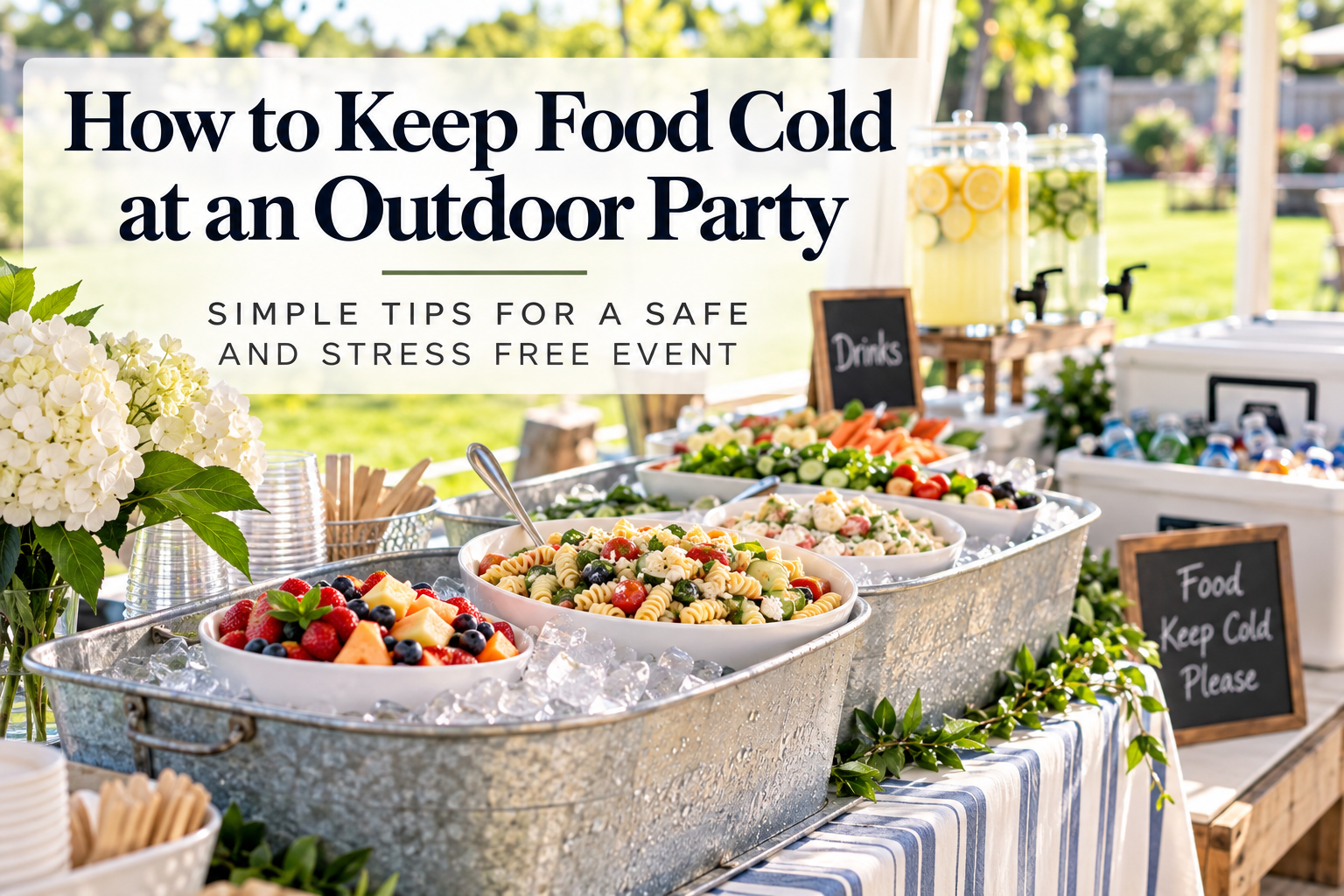
Quick Answer
The simplest system: keep cold food at 40°F or below until you are ready to serve it, bring out smaller portions instead of the entire supply, place cold serving dishes over ice when they will stay on the buffet, keep backups refrigerated or in a properly packed cooler, use a separate cooler for drinks, and keep coolers and cold food out of direct sun. The FDA advises that perishable food generally should not sit unrefrigerated for more than two hours, or one hour when it is above 90°F.
There is a point during almost every summer party when the host looks at the food table and starts wondering:
Has that pasta salad been sitting out too long?
It is easy to spend so much time thinking about tables, chairs, drinks, decorations and activities that food temperature becomes an afterthought.
Then the party starts.
The sun moves.
The ice melts.
People open the cooler every three minutes.
The fruit tray has been outside longer than you realized.
And suddenly you are running between the backyard and refrigerator trying to decide what still needs to be cold.
A better system starts before guests arrive.
The goal is not to put every cold dish outside at once and hope it stays chilled. It is to keep most of the food cold until it is actually needed, serve manageable amounts, and create a buffet setup that does not require you to babysit it all afternoon.
Here is how to do it.
Do Not Put All the Food Out When the Party Starts
This is probably the easiest change you can make.
If you have enough pasta salad for 50 people, you do not need all 50 servings sitting outside when the first guest arrives.
Put out a smaller bowl. Keep the rest cold. Refill or replace the serving dish when necessary.
The same strategy works for:
- Fruit
- Cheese
- Deli meats
- Deviled eggs
- Cold dips
- Salads
- Cut vegetables
- Desserts containing dairy
- Sandwich trays
- Anything else that requires refrigeration
The USDA specifically recommends using smaller platters and replacing them with fresh refrigerated food rather than continuously adding new food to a dish that has already been sitting on the buffet.
This has another advantage.
Your buffet looks fresher.
A small tray that is replenished several times usually looks much better than a huge tray that has been sitting outside for three hours.
Think of Your Refrigerator as Backstage
You do not need the entire menu visible at once.
At a backyard party, the refrigerator can function like backstage storage.
The buffet holds what guests need now.
The refrigerator holds the next round.
For example, imagine you are serving:
- Sandwiches
- Macaroni salad
- Fruit
- Vegetable tray
- Cake
Instead of setting everything outside at noon, put out enough for the first wave of guests.
Keep additional trays chilled.
When the first tray gets low, bring out the next one.
This works especially well for graduation open houses because people often arrive in waves rather than all sitting down for one meal.
It also gives late arriving guests food that still looks and tastes fresh.
Use Ice Baths for Foods That Need to Stay Out
Some foods need to remain accessible for longer periods.
That is when an ice bath becomes useful.
The basic setup is simple:
- Use one container for the food.
- Set that container inside a larger, shallow container filled with ice.
- The ice should surround the food container rather than simply sitting nearby.
- As the ice melts, replenish it.
The FDA specifically recommends placing individual cold serving dishes directly on ice or nesting shallow food containers inside deeper pans filled with ice.
This can work well for things like:
- Potato salad
- Pasta salad
- Coleslaw
- Cold dips
- Fruit
- Shrimp cocktail
- Dairy based desserts
You do not need a complicated catering setup.
A simple tray within a tray system can work very well.
Shade Matters More Than People Think
Do not put the cold buffet in the sun just because that is where the empty table happens to fit.
Direct sunlight works against everything you are trying to do.
The food warms faster. The serving dishes warm. Ice melts faster. Coolers have to work harder.
When possible, place the food table under natural shade, a covered patio, pavilion or other protected area.
Coolers should also stay in the shade.
USDA guidance for outdoor food recommends keeping coolers covered or shaded when possible to help them retain cold temperatures longer.
When you are planning the backyard layout, reserve the best shaded area for things that actually benefit from it.
The food station is usually one of them.
Your Drink Cooler Should Not Be Your Food Cooler
This is one of the most useful party tricks because it solves a problem guests create without realizing it.
Everyone opens the drink cooler.
Kids look for juice. Adults look for water. Someone wants a soda. Someone else stands there deciding between three drinks while the lid stays open.
Every time that happens, warm air enters.
That is not ideal for the cooler protecting your sandwiches, dairy products or salads.
When possible, use:
- Cooler 1: drinks
- Cooler 2: perishable food
The USDA specifically recommends this approach because a drink cooler tends to be opened much more frequently, causing ice to melt faster.
Your food cooler can then remain closed until you actually need something.
Start With Cold Food, Not Warm Food and Ice
A cooler works best when the food going into it is already cold.
Do not prepare pasta salad, leave it sitting on the counter, then expect a few ice packs to quickly bring everything back down.
Chill the food first.
Pre chill drinks.
Refrigerate prepared trays until you are ready to load them.
Then pack the cooler with plenty of ice or frozen gel packs.
If you know you will be using a cooler for several hours, you can even chill the cooler ahead of time rather than starting with a hot container that has been sitting in the garage.
The objective is to maintain a safe cold temperature rather than asking the cooler to rapidly chill warm food.
Put the Food You Need Last at the Bottom
Cooler organization matters.
If you know the fruit tray will come out first and the backup sandwiches will not be needed for two hours, do not bury the fruit underneath everything else.
Pack according to when you will use the food.
The things needed later can go deeper.
Items needed first should be easier to reach.
That means less time standing over an open cooler searching for something.
If raw meat is also being transported for grilling, it should be securely separated from ready to eat foods to prevent cross contamination. USDA guidance recommends keeping raw meat or poultry separate when possible, or below ready to eat foods if one cooler must be used.
Label the Coolers
This sounds almost too simple to mention.
It works.
A piece of tape that says DRINKS and another that says FOOD: PLEASE KEEP CLOSED can save you from repeatedly explaining which cooler everyone should use.
If children are attending, put their drinks somewhere obvious and accessible.
You want the cooler holding your perishable food to be the least interesting cooler at the party.
Be Careful With the Two Hour Rule
The two hour guideline does not mean everything is automatically fine for exactly two hours and suddenly bad at two hours and one minute.
Food safety does not work like a stopwatch.
The point is to minimize the time perishable foods spend in the temperature range where bacteria can multiply quickly.
FDA and USDA guidance identifies 40°F to 140°F as the food safety "danger zone." Perishable food should generally not remain without proper temperature control for more than two hours, or more than one hour when temperatures exceed 90°F.
That is another reason smaller trays make so much sense.
Instead of one bowl sitting outside for the entire party, you rotate fresh cold food onto the buffet.
Start a Simple Food Clock
You do not need spreadsheets.
Just know approximately when the food came outside.
If lunch starts at 1:00, make a mental note or set a phone reminder.
This is particularly useful during graduation parties and open houses because the food table can blend into the background once you start talking to guests.
Two hours passes quickly when you are hosting.
If it is an especially hot day, your safe unrefrigerated window may be shorter.
A reminder takes five seconds and means you are not standing over the buffet later wondering whether something came outside at 12:30 or 2:00.
Not Everything Needs to Be Kept on Ice
One mistake is treating every food item like it requires refrigeration.
It does not.
Shelf stable foods can help reduce the amount of cooler space you need.
Depending on your menu, that might include items such as:
- Whole fruit
- Chips
- Pretzels
- Crackers
- Bread
- Certain packaged snacks
- Cookies
- Unopened shelf stable condiments
Keeping those items separate from your refrigerated foods means your coolers can focus on the things that actually need cold storage.
Always check the specific product's storage instructions rather than assuming.
Cut Fruit Is Different From Whole Fruit
A bowl of whole apples is not the same thing as a tray of sliced melon.
Once some fruits and vegetables are cut, they require refrigeration.
FoodSafety.gov includes cut fruit among the perishable foods that should not sit out beyond the usual two hour limit, or one hour above 90°F.
So if you are serving watermelon slices, fruit salad or a prepared fruit tray, treat it like the other chilled foods.
Keep backup trays cold and replenish in smaller batches.
What About Catered Food?
If food arrives from a restaurant or caterer, you still need a plan for what happens after delivery.
Ask yourself:
- Is it arriving cold?
- When will guests actually eat?
- Do I have refrigerator space?
- Is there room in a cooler?
- Will it be served immediately?
A sandwich tray delivered at 11:30 for a party that starts at 1:00 should not simply sit on the kitchen counter until guests arrive.
Cold takeout and catered food should remain cold until serving.
USDA guidance specifically notes that cold takeout food for an outdoor event can be stored in a cooler packed with enough ice or frozen gel packs when refrigeration is not available.
A Graduation Open House Needs a Different Strategy
A two hour birthday party and a five hour graduation open house are not the same food service problem.
If the party is short, you may be able to serve most of the food during a defined meal window.
For an open house, guests may arrive continuously.
That makes rotating smaller trays much more important.
Instead of thinking "the buffet has to stay full all afternoon," think "the buffet needs to have enough food for the guests who are here right now."
Keep backups cold.
Refill as needed.
Your food will stay fresher and your table will be easier to manage.
Keep the Drink Station Away From the Food When Possible
This helps with more than guest flow.
If drinks and cold food are on the same table, people constantly reach around the food for cups, ice and beverages.
Spills happen. Cooler lids stay open. Children congregate around the buffet.
Separating the drink station makes both areas easier to manage.
You already need ice for beverages, but remember that drink ice and food cooling ice are doing two different jobs.
Do not assume the ice you purchased for cups will automatically be enough to keep food pans chilled for several hours.
Our existing guide on how much ice you need for a party goes deeper into overall ice planning.
Do Not Keep Adding Fresh Food to an Old Serving Dish
This is another small detail that matters.
If a tray has been sitting outside and is almost empty, do not simply dump a new batch of cold food on top.
Replace the tray.
FDA guidance recommends replacing nearly empty dishes with freshly filled ones rather than mixing new food into food that has already been sitting out.
That also gives you an opportunity to clean up the buffet and make it look fresh again.
Have a Leftover Plan Before the Party Ends
The party is winding down.
Everyone is talking.
Someone is stacking plates.
This is exactly when food can get forgotten.
Before guests arrive, make sure you have:
- Clean food storage containers
- Foil or wraps
- Refrigerator space
- Cooler space if needed
- A plan for what should be discarded
Perishable leftovers should be refrigerated promptly rather than sitting outside while the rest of the party gets cleaned up.
Do not save questionable food because throwing it away feels wasteful.
When in doubt about how long a perishable item has been sitting without proper temperature control, the safest choice is not to keep it.
A Simple Outdoor Party Cold Food Setup
For a typical backyard party, this setup works well:
| Location | What Goes There |
|---|---|
| Inside refrigerator | Backup trays and anything that will not be served yet |
| Food cooler | Additional cold food needed later in the event |
| Drink cooler | Water, soda and children's drinks |
| Buffet | Small amounts of the foods guests need right now |
| Ice bath | Perishable dishes that need to remain available |
| Shade | The buffet and coolers whenever possible |
This does not require professional catering equipment.
It just requires deciding where everything goes before the first guest arrives.
Frequently Asked Questions
How long can cold food sit outside at a party?
Perishable food generally should not remain without refrigeration or another proper cold holding method for more than two hours. If the outdoor temperature is above 90°F, FDA and USDA guidance reduces that time to one hour.
What temperature should cold party food stay at?
Cold perishable food should be kept at 40°F or below.
How do you keep pasta salad cold at a party?
Keep the main supply refrigerated or in a properly packed cooler. Serve a smaller bowl and either nest the serving bowl in a larger container of ice or replace it periodically with a fresh chilled bowl.
How do you keep a fruit tray cold outside?
Keep prepared cut fruit refrigerated until close to serving time. For longer service, place the tray over ice and replenish the ice as necessary. Keep backup fruit trays cold until needed.
Should I use separate coolers for food and drinks?
When possible, yes. The drink cooler is opened frequently, which allows warm air inside and melts ice faster. Keeping perishable foods in a separate cooler helps that cooler stay cold and closed.
Can I put cold food directly on ice?
Cold serving dishes can be placed on ice or nested inside a deeper container filled with ice. The goal is to maintain the food at 40°F or below.
How do I keep food cold for an all day graduation party?
Do not put the entire food supply outside at once. Keep backup food refrigerated or in a properly packed cooler and replenish the buffet with smaller chilled trays throughout the event.
Keep the Food Cold and Keep Yourself at the Party
A good outdoor food setup should not turn the host into a full time refrigerator runner.
The trick is not finding a magical way to leave every dish outside all afternoon.
It is building a simple rotation.
Keep most of the food cold. Put out what guests need. Use ice for the dishes that have to stay outside. Separate the food cooler from the drink cooler. Keep everything shaded when possible. Watch the clock.
Then replenish instead of starting with an overflowing buffet.
That system works for backyard birthdays, graduation open houses, family reunions, showers and summer parties throughout the Capital Region.
And more importantly, it lets you spend less time worrying about the macaroni salad and more time actually enjoying the people you invited.
Three Sisters Party Co. provides tables, chairs, food warming mats, concession machines, coffee urns, backyard games and other party rentals for events throughout Albany and the surrounding Capital Region.
Planning your setup? Use our Party Rental Calculator to estimate tables, chairs and serving stations, then Check Availability with your event date and full address.
See packages and pricing, try the party rental calculator, or check availability.