How to Keep Food Warm at a Party Without Chafing Dishes
By Katie, Three Sisters Party Co. ·
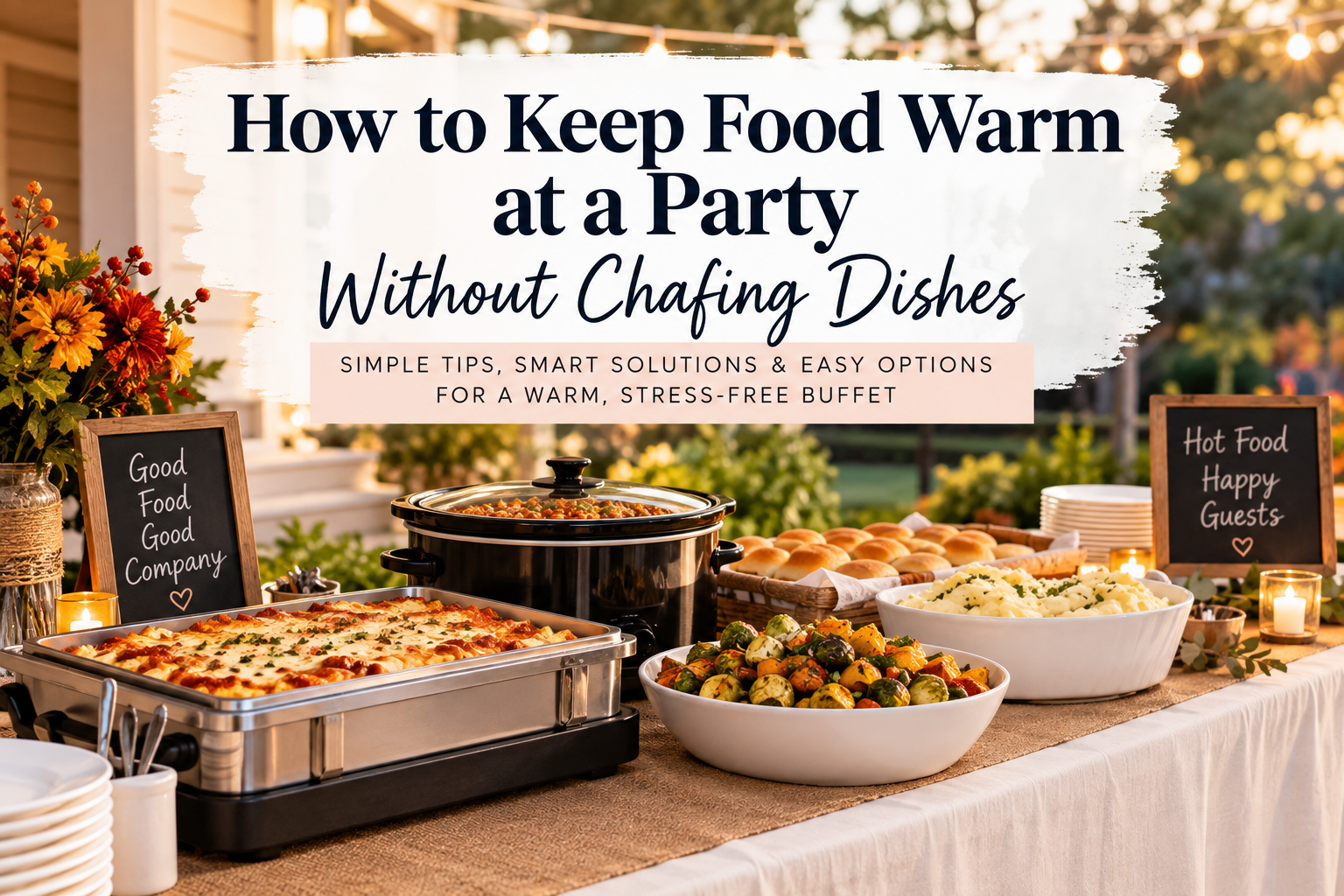
Quick Answer
Keep party food warm without chafing dishes by combining electric warming mats or trays, slow cookers, a low oven for backup food, and smaller serving portions. Start with fully cooked, hot food and use a thermometer to verify hot holding at 140°F or warmer. Warming equipment maintains temperature and is not a substitute for proper reheating.
You spend all morning cooking.
The baked ziti comes out hot. The meatballs are ready. The macaroni and cheese looks perfect.
Then the doorbell rings.
People start talking. Someone needs help finding a parking spot. The kids want drinks. By the time everyone makes a plate, half the food that was piping hot 45 minutes ago is barely warm.
Keeping food hot is one of those party details that seems simple until you are actually hosting.
The good news is that you do not need a row of catering chafing dishes to make a buffet work. For many home parties, a combination of your oven, slow cookers, electric warming trays or mats, smaller serving dishes, and smart timing can be much easier.
The key is understanding one important difference:
Cooking food and holding food warm are not the same job.
Hot Food Needs to Stay Hot
Food safety matters as much as comfort.
FDA guidance says hot foods being held for serving should stay at 140°F or warmer. Food that merely feels warm is not necessarily being held at the right temperature.
Think of warming equipment as the holding team, not the cooking team.
Cook or properly reheat the food first. Then move it to the method you are using to maintain the temperature.
If food will sit out for an extended period, check the instructions for the equipment you are using and use a food thermometer instead of guessing.
Start With Food That Is Already Hot
Timing makes a huge difference.
If the baked ziti finishes cooking two hours before guests are ready to eat, you have created a much harder problem than necessary.
Whenever possible, work backward from serving time.
Decide which foods can stay hot well, which should finish closer to serving time, and which can remain in the oven until needed.
That one decision can make the entire buffet easier.
Use an Electric Warming Tray or Warming Mat
For a home buffet, an electric warming surface can be one of the simplest alternatives to traditional chafing dishes.
You plug it in, place appropriate heat safe serving dishes on top, and use the serving pieces you already own.
Warming surfaces can work well for baked pasta, macaroni and cheese, mashed potatoes, casseroles, cooked vegetables, meatballs in sauce, and hot appetizers.
They are flexible, easy to work into a home buffet, and do not require hotel pans or chafing fuel.
Three Sisters Party Co. rents food warming mats, and we already have a separate article explaining how many warming mats you may need based on the number and size of your hot dishes.
Always follow the instructions for the exact warmer you are using.
Use Slow Cookers for Foods That Like Moist Heat
The slow cooker may already be one of the best hot holding tools in your kitchen.
It is especially useful for chili, soup, pulled pork, meatballs, shredded chicken, buffalo chicken dip, queso, sauces, and gravy.
These foods benefit from enclosed, moist heat. Slow cookers are less useful for foods that should stay crisp.
If you use a slow cooker’s warm setting, the food should already be fully cooked and hot before it goes in.
Let Your Oven Handle the Backup Food
Your oven is one of the most useful pieces of party equipment you already own.
Instead of putting every hot dish onto the buffet when the first guest arrives, keep backup dishes warm inside.
FDA buffet guidance recommends keeping hot backup foods in an oven around 200°F to 250°F before serving.
Imagine you have two trays of baked ziti. Put one on the buffet and keep the second in the oven. When the first tray is nearly finished, bring out the fresh one.
This works especially well for events where people may eat in waves.
Do Not Put Everything Out at Once
If only 15 of your 50 guests are ready to eat, putting every hot dish out at once simply gives the food more time to cool.
Use smaller serving dishes when practical, keep backup portions hot, and replace or refill them as needed.
Match the Warming Method to the Food
Different foods need different treatment.
Pasta and casseroles: Covered serving dishes on a warming surface can work well.
Meatballs, pulled pork, chili, and hot dips: Slow cookers are a natural fit because these foods hold well in moist heat.
Mashed potatoes: A covered dish with gentle heat usually works better than leaving a large open bowl on the buffet.
Pizza: Too much enclosed moisture can soften the crust. For a large party, staggering delivery or pickup may work better than trying to keep many boxes hot for hours.
Fried foods: Serve them closer to eating time. Long periods under a lid usually hurt the texture.
Plan Your Buffet Around Electricity
Electric warming equipment creates one practical problem people often overlook: power.
A buffet table may look perfect across the yard, but that does not help if your warmer needs electricity and the nearest usable outlet is far away.
Before party day, locate the outlet, check the warmer’s power requirements, and make sure any extension cord you use is allowed by the manufacturer and appropriate for the application.
Keep cords away from walkways and avoid overloading outlets or circuits.
The best buffet location is not just the prettiest one. It has to function safely.
Use a Food Thermometer Instead of Guessing
Food can feel warm without actually being hot enough for proper holding.
A basic food thermometer removes the guesswork.
For hot holding, FDA guidance recommends keeping food at 140°F or above.
This is especially useful during longer events. “It still feels pretty warm” is not a reliable temperature control system.
Warming Equipment Does Not Replace Reheating
If food has cooled significantly, do not assume placing it on a warming mat will quickly bring it back to the right temperature.
Warming equipment is generally designed to maintain temperature.
If food needs reheating, use an appropriate cooking appliance and follow the reheating guidance for that particular dish. Then move it back to hot holding.
Create Three Simple Food Zones
For a typical home party, think about your food in three zones.
Zone 1: The Buffet
Only the food guests need now. Hot dishes sit on the appropriate warming equipment.
Zone 2: The Kitchen
Backup hot dishes stay in the oven. Cold backups stay in the refrigerator.
Zone 3: The Refill Area
Extra serving utensils, foil, napkins, storage containers, and backup supplies stay nearby but out of the main buffet line.
Count Hot Dishes, Not Just Guests
When deciding how much warming equipment you need, start with the menu.
A large buffet might have only three hot foods while a smaller party might have six.
Write down every hot item and assign it a holding method:
- Slow cooker
- Warming mat
- Oven backup
- Serve immediately
Once every dish has a home, the buffet becomes much easier to manage.
Frequently Asked Questions
How do I keep food warm at a party without chafing dishes?
Use electric warming trays or mats, slow cookers, a low oven for backup food, and smaller serving portions that can be replaced as needed.
What temperature should hot party food stay at?
FDA guidance recommends holding hot food at 140°F or warmer.
Can a warming tray keep food safe?
It depends on the specific equipment. Check the manufacturer’s specifications and verify the food temperature with a thermometer when using equipment for extended hot holding.
Can I keep party food warm in the oven?
Yes. Keeping backup dishes in a low oven can be an easy way to rotate fresh hot food onto the buffet. FDA guidance suggests roughly 200°F to 250°F for hot backup foods.
Can I use a slow cooker to keep food warm?
Yes. Slow cookers are useful for already cooked foods such as chili, meatballs, pulled pork, soups, and dips.
Do warming mats reheat cold food?
They should not be treated as a substitute for proper reheating. Heat the food appropriately first, then use suitable warming equipment to help maintain temperature.
The Best Buffet Is the One You Do Not Have to Babysit
Keeping food warm at a party does not have to mean standing beside a row of chafing dishes all afternoon.
Build the system before guests arrive. Decide what stays in the oven, assign slow cookers where they make sense, use warming trays or mats for appropriate dishes, bring out smaller portions, and check temperatures instead of guessing.
The real goal is not just hot macaroni and cheese.
It is being able to walk away from the buffet, talk to your guests, and actually enjoy the party you spent all week planning.
Three Sisters Party Co. provides food warming mats, 45 cup coffee urns, tables, chairs, concession machines, and other party rentals for birthdays, graduations, showers, family gatherings, and backyard events throughout Albany and the surrounding Capital Region.
Planning a buffet? Read our How Many Food Warming Mats Do You Need for a Party Buffet? article, use the Party Rental Calculator, or Check Availability with your event date and full address.
See packages and pricing, try the party rental calculator, or check availability.