How to Keep Folding Chairs From Sinking Into Grass at an Outdoor Party
By Katie, Three Sisters Party Co. ·
Quick Answer
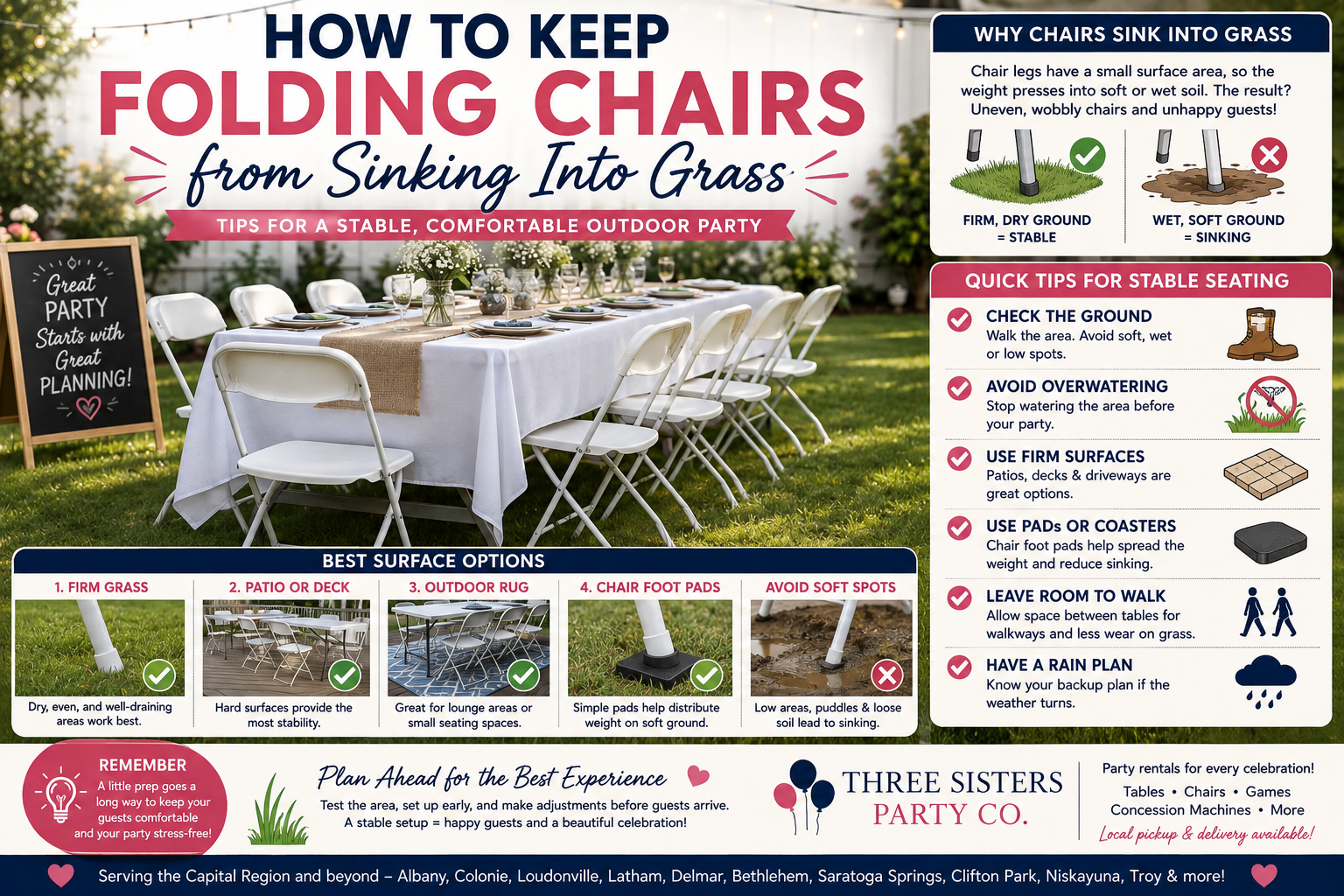
Use the firmest, driest part of the yard, test one chair before full setup, leave extra space between tables, and have a rain backup plan using patios, garages, or covered areas.
Folding chairs make it possible to create comfortable seating almost anywhere. They can turn a backyard, public pavilion, open lawn, or graduation party tent into a practical place for guests to eat, visit, and enjoy the celebration.
However, placing chairs on grass creates a problem that many hosts do not consider until the party has already started.
The chair legs begin sinking into the lawn.
One guest feels as though the chair is leaning backward. Another chair becomes uneven after someone sits down. The ground around the dining tables becomes soft and marked, especially if it rained during the week before the event.
For families planning graduation parties, birthday celebrations, family reunions, school events, and backyard gatherings throughout Albany, Loudonville, Latham, Colonie, Delmar, Bethlehem, Saratoga Springs, Clifton Park, Niskayuna, Troy, and the surrounding Capital Region, the condition of the ground matters just as much as the number of chairs being rented.
You cannot always prevent every chair mark on a lawn, but you can reduce sinking, improve stability, and create a more comfortable seating area with a little preparation.
1. Check the Ground Before Setting Up the Chairs
The first step is walking through the entire seating area before placing any tables or chairs.
Do not judge the lawn only by how it looks from the patio or driveway. Grass may appear dry on top while the soil underneath is still soft.
Walk across the proposed seating area wearing the same type of shoes guests may wear. Pay attention to areas where your feet sink slightly, water collects, or the ground feels uneven.
Check the lawn again after placing one chair in the area. Sit in the chair, shift your weight, and see whether the legs remain level.
One test chair can reveal problems that are difficult to notice while standing.
If the chair sinks immediately, move the seating area before arranging the rest of the rentals.
2. Understand Why Chairs Sink Into Grass
A folding chair places the combined weight of the chair and the person sitting in it onto a relatively small contact area.
When the soil is firm and dry, it may support that pressure without much movement. When the ground is wet, loose, recently disturbed, or naturally soft, the chair feet can press into the soil.
The problem may be worse when a guest leans backward, shifts to one side, or sits down quickly.
Chairs can also become uneven when one leg lands in a low spot while the other legs remain on firmer ground.
The goal is not simply to hide the grass. The goal is to choose the firmest possible surface and distribute the chair's weight more evenly.
3. Avoid the Wettest Parts of the Yard
Most backyards do not drain evenly.
One section may stay firm after rain while another remains soft for several days. Low areas, shaded areas, and locations near downspouts are often more likely to retain moisture.
Avoid placing guest seating near:
- Downspout discharge areas
- Low sections of the lawn
- Recently filled holes
- Newly planted grass
- Irrigation heads
- Septic covers
- Areas with visible standing water
You do not need to move the entire party because of one wet section.
Instead, use the firmest part of the yard for guest seating and reserve softer areas for decorations, signs, or activities that do not require furniture.
A small change in the layout can make the chairs significantly more stable.
4. Stop Watering the Seating Area Before the Party
If you normally water the lawn on a schedule, pause irrigation in the planned seating area before the event.
The exact timing depends on the weather and condition of the grass, but watering the lawn on the morning of the party can create unnecessary softness.
Turn off automatic sprinklers so they do not activate underneath rental tables, chairs, concession machines, or guests.
This is especially important when equipment is delivered or arranged the day before the celebration.
Check the sprinkler schedule several days before the party rather than waiting until the tables are already in place.
You should also redirect movable sprinklers and hoses away from the event area.
5. Place Guest Seating on the Firmest Available Surface
Grass may be the only option for part of the party, but it does not need to be the only surface used.
Patios, decks, driveways, garages, and paved areas can hold some of the seating or utility tables.
For example, you might place the food buffet and concession machines on the patio while using the lawn for guest tables. Older relatives or guests with mobility concerns may be more comfortable sitting on the firm surface closest to the house.
A mixed surface layout can also reduce crowding.
Use the lawn where it makes sense, but take advantage of existing hard surfaces whenever possible.
Do not place chairs on a steep driveway or sloped patio simply because the surface is firm. The seating area still needs to be level.
6. Use Outdoor Furniture Pads Carefully
Furniture pads, lawn chair coasters, and chair feet designed to resist sinking are designed to create a wider surface underneath a chair leg.
The larger contact area may help distribute the weight and reduce how deeply the leg presses into soft ground.
These products are most useful when they fit the chair correctly and remain securely positioned.
Loose pads can shift when a guest moves the chair. A pad that is too small may not solve the problem, while an oversized pad can become a tripping hazard.
Do not attach, tape, screw, or permanently fasten anything to rental chairs.
If you are considering chair foot pads for rented equipment, confirm that the product can be used without altering or damaging the chair.
Test the complete setup before guests arrive. Sit down, move the chair slightly, and make sure every pad remains in place.
7. Consider an Outdoor Rug for a Small Seating Area
An outdoor rug can help define a conversation area and provide a more consistent surface underneath a small group of chairs.
This may work well for a lounge area with four to six chairs, a covered patio extension, or a special seating space for the graduate and grandparents.
The rug should lie completely flat and should not have curled edges.
Avoid placing a lightweight rug on uneven grass where it can bunch, slide, or conceal holes underneath it. Secure it appropriately without using anything that could damage rental equipment.
An outdoor rug is usually more practical for a small conversation area than for dozens of dining chairs.
Covering an entire lawn with rugs or temporary mats can become expensive and may create more edges for guests to trip over.
8. Do Not Place Chairs Across a Hidden Slope
A yard may appear flat until tables and chairs are arranged.
Even a modest slope can make a chair feel unstable. The front legs may sit firmly while the rear legs sink or slide. Guests may also feel as though they are leaning toward or away from the table.
Place one table in the proposed location and arrange the planned number of chairs around it.
Sit in every position, including the chairs at the ends.
If one side feels noticeably lower, rotate the table or move it to another section of the lawn.
Do not try to correct a significant slope with random pieces of wood, folded cardboard, stones, or loose materials underneath the chair legs. Improvised supports can move and create a greater safety concern.
9. Leave More Space Between Tables on Soft Ground
When tables are placed too close together, guests repeatedly walk through the same narrow paths.
Heavy foot traffic can soften the ground, create worn areas, and increase the likelihood of chair legs landing in damaged soil.
Leave enough room for guests to pull out their chairs and walk behind seated people.
When space permits, approximately three feet behind occupied chairs is a practical goal.
Wide walkways are particularly helpful near the food buffet, drink station, gift table, and bathroom route. These areas receive the most traffic during the party.
A comfortable layout protects the lawn and also makes the event easier for guests to navigate.
10. Think About Which Guests Need the Firmest Seating
Not every chair location provides the same level of stability.
Reserve the firmest and most accessible seating for older adults, pregnant guests, anyone using a cane or walker, and guests who may have difficulty standing from an uneven chair.
Place those seats near a patio, walkway, or other solid surface when possible.
Children's seating can sometimes be arranged on the lawn because children place less total weight on the chairs. However, the area still needs to be level and safe.
Do not assume that a chair is stable simply because a child will use it.
Children move, lean, climb, and shift positions more often than adults. Test the seating area before the party begins.
11. Recheck the Chairs After Guests Begin Using Them
A chair that feels stable during setup may shift after someone has been sitting in it.
Walk through the seating area during the event and look for chairs that are leaning, sinking, or positioned partly inside a hole.
This is especially important after a brief rain shower or when guests move chairs away from the original layout.
Hosts often arrange a safe seating area, only to have guests carry the chairs to a softer section of the yard.
Politely move unstable chairs back to firmer ground.
After guests leave a table, check whether the chair legs created deep impressions before another person sits down.
12. Have a Rain Backup Plan
Rain during the days before the party can change the entire seating plan.
A lawn that normally supports tables and chairs may become too soft after several hours of heavy rain.
Prepare a backup arrangement before the forecast becomes a problem.
The backup may include moving some tables into the garage, using a covered patio, reducing the number of tables on the lawn, or creating several smaller seating areas on firm surfaces.
Do not wait until the morning of the party to decide where everything will go.
Measure the garage, patio, or indoor space in advance. Confirm that doors, vehicles, storage bins, and other household items can be moved if needed.
A backup plan does not need to duplicate the original layout perfectly. It only needs to provide a safe and workable place for guests.
13. Protect the Lawn After the Party
Remove tables and chairs from the grass as soon as practical after the event.
Leaving furniture in the same position for an extended period can flatten the grass and make existing impressions more noticeable.
Once the rentals are removed, inspect the seating area.
Lightly lift flattened grass with a rake when needed. Allow compacted areas to dry before adding more foot traffic.
Small chair marks may improve naturally as the soil dries and the grass recovers.
Avoid immediately flooding the area with water. If the ground is already soft, additional water may make the impressions worse.
For deeper damage, wait until the lawn is dry enough to work with before leveling or repairing the affected soil.
14. Avoid Altering Rental Chairs
Rental chairs should be returned in the same condition in which they were received.
Do not drill holes, remove feet, attach permanent hardware, apply adhesive, or wrap the legs with materials that may leave residue.
Do not use rental chairs as anchors for tents, balloons, signs, or decorations.
If you use removable pads or coasters underneath the chair feet, make sure they do not scratch, stain, bend, or otherwise damage the chair.
The customer is responsible for placing and arranging the chairs safely during the rental period.
When you are uncertain about a ground protection product, ask before using it with rental equipment.
15. Plan the Seating Layout Before Delivery or Pickup
The best time to evaluate the lawn is before the rentals arrive.
Determine which part of the yard is firmest, how many tables will be used for seating, and where guests will walk.
Mark the general table locations with small removable lawn flags, cones, or another temporary marker.
Do not use permanent paint or anything that will create a hazard.
Planning the layout early also helps you determine whether the yard can comfortably hold the number of tables and chairs being reserved.
A standard 6 foot table can seat six guests comfortably or up to eight when both ends are used. However, the table and chairs require significantly more room than the tabletop dimensions alone.
Leave space for guests to sit, stand, and move without forcing chairs into soft edges or crowded pathways.
16. Understand What Comes With Your Chair Rental
Three Sisters Party Co. provides tables and chairs for graduation parties, birthdays, school events, family reunions, and backyard gatherings throughout the Capital Region.
Tables and chairs are rental only. Customers are responsible for placing, arranging, and setting up the equipment unless another service has been specifically confirmed.
The host is also responsible for selecting a safe, level, and appropriate location for the rentals during the event.
Pickup is available, and local delivery may be available depending on the event date, address, rental items, order size, and schedule.
When checking availability, provide your event date, full address, estimated guest count, requested number of tables and chairs, and pickup or delivery preference.
Let us know when the event will take place primarily on grass so the rental plan is clear before the reservation is finalized.
Frequently Asked Questions
Why do folding chairs sink into grass?
Chair legs concentrate the weight of the chair and guest onto a small area. Soft or wet soil may not provide enough support, causing the feet to press into the ground.
Will folding chairs damage my lawn?
Chairs may leave temporary impressions, especially when the soil is wet. Choosing firm ground, moving the rentals promptly after the event, and avoiding overwatered areas can reduce the impact.
Should I put plywood underneath all the chairs?
Covering a large seating area with plywood creates edges, transitions, and potential tripping hazards. It may also require significant labor to level and secure properly. A firm natural surface or professionally installed temporary flooring is generally better for a large seating area.
Can I use chair foot pads with rental chairs?
Removable pads may help when they fit properly and do not alter or damage the chair. Confirm that the product is appropriate before using it with rented equipment.
Do outdoor rugs keep chairs from sinking?
An outdoor rug may help create a more consistent surface for a small conversation area. It will not correct a severely wet, uneven, or muddy lawn.
How can I tell whether the grass is too soft?
Walk through the area and test a chair before completing the setup. If your shoes leave deep impressions or the chair moves noticeably when you sit down, choose a firmer location.
Should I water the lawn before an outdoor party?
Avoid watering the planned seating area immediately before the event. Check automatic sprinkler schedules so the lawn and rental equipment are not watered after setup.
What should I do if rain is expected?
Prepare a backup layout using a garage, patio, pavilion, tented area, or other firm surface. Recheck the lawn after the rain before placing the chairs.
Does chair delivery include setup?
Delivery does not automatically include table or chair setup. Customers place and arrange the rentals unless a different service has been specifically confirmed.
Create a Stable and Comfortable Seating Area
Folding chairs can work well on grass when the lawn is firm, level, and properly evaluated before the party.
Begin by checking the ground, avoiding wet areas, turning off irrigation, and testing one complete table and chair arrangement.
Use existing patios and paved surfaces where they make sense. Leave comfortable walkways, reserve the firmest seats for guests who need them, and prepare a backup plan when rain is possible.
The goal is not to prevent every temporary mark in the lawn. It is to keep the seating stable, protect the rental equipment, and help guests feel comfortable throughout the celebration.
Three Sisters Party Co. provides table and chair rentals, concession machines, backyard games, outdoor movie equipment, and party add-ons for events throughout Albany, Colonie, Loudonville, Latham, Delmar, Bethlehem, Saratoga Springs, Clifton Park, Niskayuna, Troy, and the surrounding Capital Region.
View our Packages and Pricing, use the Party Rental Calculator, or check availability for your event date and address.
For outdoor parties throughout Albany, Colonie, Loudonville, Latham, Delmar, Bethlehem, Saratoga Springs, Clifton Park, Niskayuna, Troy, and the surrounding Capital Region.
See packages and pricing, try the party rental calculator, or check availability.